TL;DR
- Yes, some RV solar tasks are safe to DIY, like mounting panels and running basic wiring with proper connectors.
- Battery bank wiring, inverter installation, and charge controller programming should be handled by a certified tech.
- Mistakes can void your RV manufacturer's warranty and create serious fire or shock hazards.
- Professional RV solar installation in Stuart typically runs $200 to $4,500 depending on system size.
- Treasure Coast RV Repair has completed 4,100+ repairs and serves Stuart and surrounding Martin County areas.
Yes, you can do some RV solar work yourself, but not all of it. Simpler tasks like mounting solar panels on your roof or connecting pre-wired components with MC4 connectors are reasonable DIY projects for a handy RV owner. But wiring your battery bank, programming a charge controller, or installing a lithium battery system? Those jobs carry real risks and often need a certified technician to stay compliant with NEC Article 551 and NFPA 1192 guidelines that govern RV electrical systems.
We've been helping RV owners across Stuart, Martin County, and the wider Treasure Coast since 2013. Danny Vasquez and our RVIA-certified team have seen what happens when solar installs go wrong, and we want to help you make a smart call before you pick up a wire stripper. Whether you're camping near Halpatiokee Regional Park or living full-time in your rig, this guide will walk you through exactly where the DIY line is. You can also check out our RV solar power services page to see what a professional install covers.
What's Actually Safe to DIY on an RV Solar System
A few tasks genuinely don't require a licensed technician, and tackling them yourself can save you money. Mounting solar panels to your roof using manufacturer-approved brackets, connecting panels together with MC4 connectors, and installing a battery monitor (a device that tracks your battery's state of charge) are all tasks a capable DIYer can handle safely. These jobs follow straightforward instructions and don't put you in contact with high-amperage DC circuits.
Running conduit or cable management to keep wiring organized is another reasonable weekend project. So is performing a basic energy audit, which means calculating how many watts your appliances draw daily, to figure out what size system you actually need. Many RV owners in Stuart start here before calling us to handle the rest. If you're still weighing whether solar makes financial sense for your situation, our blog post Is RV Solar Worth It in Florida? breaks down the numbers honestly.
What Needs a Certified RV Solar Technician in Stuart
Once you move past panel mounting and basic connections, the work gets significantly more technical and the stakes get higher. Wiring a lithium battery bank involves balancing cells, setting correct charge parameters, and managing high-amperage connections that can cause arc flash or fire if done incorrectly. Inverter installation requires integrating the unit with your shore power circuit, which touches 120V AC wiring and must comply with RVIA guidelines and NEC Article 551.
Charge controller programming is another area that trips up a lot of DIYers. Setting the wrong charge profile for your battery chemistry, say, using AGM settings on a lithium battery, can permanently damage a battery bank worth $800 or more. Our RVIA-certified technicians serving Stuart and surrounding Martin County are trained specifically on off-grid system design and integration. We also handle the load testing and final inspection that confirms your system is safe before you depend on it in the Florida heat.
Why Florida's Climate Makes This More Complex
Stuart's heat, humidity, and salt air are genuinely hard on RV electrical components in ways that colder climates don't face. UV exposure degrades MC4 connectors and cable jacketing faster here than almost anywhere in the country. A connection that looks fine in June can become a fire hazard by August if it wasn't sealed properly for Martin County's coastal conditions.
Lithium batteries also have tighter thermal management requirements, and Florida summers push ambient temperatures well above what many battery management systems (BMS units) are rated to handle without proper ventilation. Our team accounts for all of this during every solar installation, something a generic YouTube tutorial simply can't cover for your specific setup.
Pro Tip: Test Before You Trust
Before relying on any DIY solar work for full-time power, run your system for at least two full charge-discharge cycles and use a clamp meter to verify amperage at every connection point. If any connection runs warm to the touch, that's a warning sign. Heat at a connection means resistance, and resistance in a 12V high-amp circuit is a fire risk. Call (772) 677-1583 if anything doesn't add up.
Tools You'll Need for Safe DIY RV Solar Work
If you're going to do the parts of this job that are appropriate for DIY, you need the right tools. A quality multimeter is non-negotiable because you'll need to verify voltage at every stage. MC4 connector crimping tools are specific to solar wiring and can't be swapped out for regular wire crimpers without risking a bad connection. A torque screwdriver is important for terminal connections since over-tightening or under-tightening battery terminals causes problems fast.
You'll also want a clamp meter to measure current without breaking the circuit, proper wire strippers sized for 10-gauge and 8-gauge cable, and UV-resistant conduit or cable loom for any wiring that runs outside. Don't skip the heat-shrink butt connectors either. Plain crimp connectors exposed to Stuart's humidity will corrode faster than you'd expect. The right tools run $150 to $300 total, which is worth budgeting before you start the job.
| Service | DIY Feasibility | Estimated Cost (Professional) |
|---|---|---|
| Solar panel mounting | Yes, with proper brackets | $200–$400 |
| Charge controller install and programming | Not recommended | $300–$600 |
| Battery monitor installation | Yes, basic units | $200–$350 |
| Lithium battery bank wiring | No, certified tech required | $600–$1,500 |
| Inverter installation (120V AC) | No, licensed electrician or RVIA tech required | $500–$1,200 |
| Full off-grid solar system build | Partial DIY only | $1,500–$4,500 |
Pricing Disclaimer
All prices shown are estimates based on national averages and our service history. Actual costs may vary depending on current market conditions, parts availability, your specific RV model, and the scope of work required. The only way to determine your final cost is through an on-site diagnosis by our certified technician. Call (772) 677-1583 for a free estimate.
When DIY RV Solar Work Voids Your Warranty
This is the part most people overlook until it's too late. Many RV manufacturers require that electrical modifications be performed by an RVIA-certified technician to maintain the factory warranty. If you wire a solar system yourself and then have a roof leak, an electrical fire, or a battery failure, your manufacturer or insurance company may deny the claim based on unauthorized modifications. That's a costly surprise nobody wants.
Battery manufacturers are even stricter. Lithium battery warranties from major brands typically require installation to follow manufacturer specs exactly, including wire gauge, fuse sizing, and BMS settings. If those specs aren't met and documented, the warranty is gone. Our team keeps records of every install we complete, which protects you if something comes up later. You can see how solar fits into the bigger picture of RV ownership costs in our RV Repair Cost Guide for the Treasure Coast.
What Happens When RV Solar Installs Go Wrong
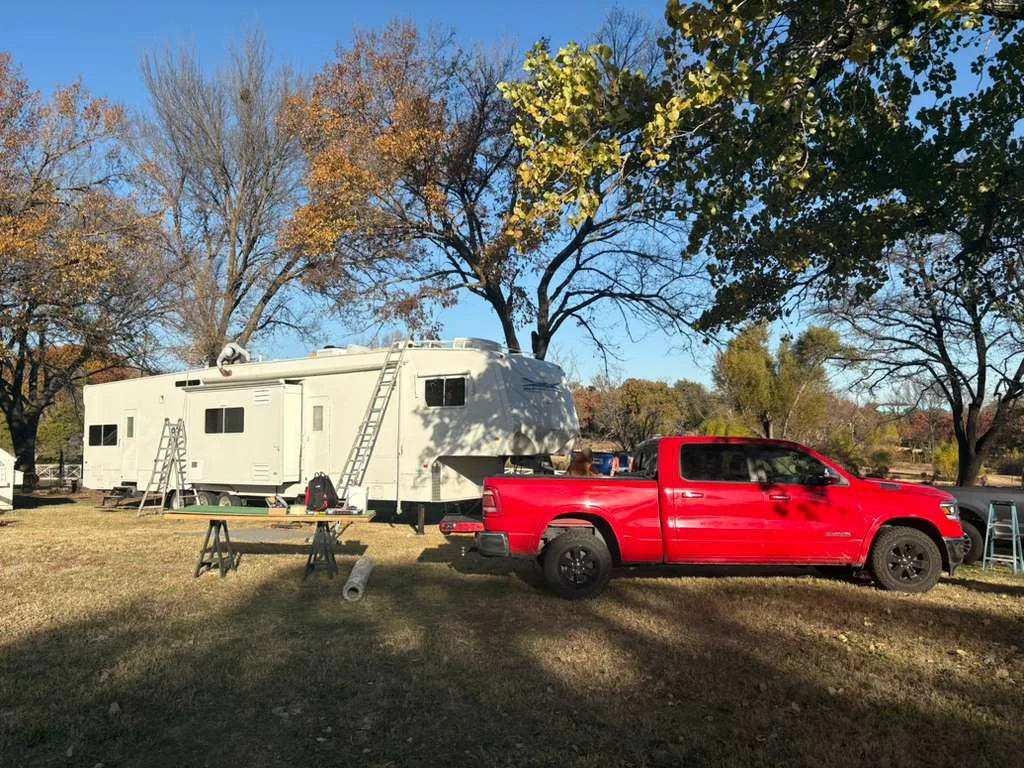
In 13 years and 4,100+ repairs, we've seen DIY solar jobs cause some expensive problems. The most common issue we fix is undersized wiring that overheats under load, which can melt insulation and ignite nearby materials. A close second is improperly fused circuits, where a short circuit has no protection and runs until something burns.
We've also seen charge controllers set to the wrong battery profile, silently killing a $1,200 lithium battery over three months of improper charging. These repairs cost more than a professional install would have in the first place. If you're unsure where your project falls on the DIY versus professional line, our team serving Stuart and the surrounding Treasure Coast is happy to take a look and give you an honest answer.
How Treasure Coast RV Repair Handles Solar Installs
Danny Vasquez founded Treasure Coast RV Repair in 2013 with a focus on doing the work right the first time. Our RVIA-certified technicians design every solar system around your actual power needs, the layout of your specific RV roof, and the demands of Florida's climate. We don't use one-size-fits-all packages because your needs camping in Stuart are different from someone parked long-term at a campground near Lake Okeechobee.
Every install includes a post-installation inspection, load testing, and a walkthrough so you understand exactly how your system works. We're licensed, bonded, and insured, and we serve 16 cities across St. Lucie, Martin, and Indian River counties. For RV owners who want to pair their solar investment with better cooling efficiency, our blog post The Treasure Coast RV AC Survival Guide shows how the two systems work together. Reach out to our RV solar installation team to get a free on-site estimate.
Questions about rv solar power on the Treasure Coast? Call (772) 677-1583 and ask for Danny. Free estimates, same-day service available.