TL;DR
- If your RV solar system stops working, check the charge controller display first. A blank or flashing screen usually means a wiring fault or blown fuse.
- Turn off all non-essential loads immediately to protect your lithium battery bank from deep discharge below 20% capacity.
- Florida's UV index and salt air near Hobe Sound accelerate panel degradation and corrosion faster than most other states.
- Emergency solar repairs on the Treasure Coast typically run $200 to $4,500 depending on what failed.
- Call Treasure Coast RV Repair at (772) 677-1583 for same-day mobile diagnosis across Martin County.
When your RV solar system goes down in Hobe Sound, the fix starts with one immediate action: shut off your inverter and disconnect non-essential loads right away. That single step can be the difference between a minor repair and a completely destroyed lithium battery bank. We've seen it play out both ways after 13+ years of mobile RV repairs across Martin County, and the ones who act fast almost always pay less. If you're parked near Jonathan Dickinson State Park or sitting at a full-hookup site off US-1, you've got options, but off-grid campers have a much tighter window before the damage compounds. This guide walks you through every emergency step for RV solar power failures, from the first warning sign to the moment you call a certified tech. We'll cover what's safe to touch, what absolutely isn't, and what the Florida heat and humidity are doing to your system right now that you probably don't know about.
What to Do the Moment Your RV Solar System Stops Working
The first thing to do when your solar system fails is stay calm and resist the urge to start pulling wires. Check your charge controller display first. A blank screen, flashing error code, or low-voltage alarm tells you a lot without touching anything dangerous. Most MPPT and PWM charge controllers (a charge controller is the device that regulates power flow from your solar panels to your battery bank) will show a fault code that narrows down the problem instantly.
Next, turn off your inverter completely. Inverters draw significant standby current, and if your batteries are already compromised, running the inverter will drain them faster than anything else in your rig. After that, disconnect any loads you don't absolutely need, like entertainment systems, secondary lighting, and air conditioning if you're not on shore power.
Write down any error codes you see on the charge controller before they disappear. Take a photo with your phone. That information saves our technicians real diagnostic time when we arrive, and it can lower your total repair bill on a job that might otherwise run $400 to $900 for a full electrical diagnosis.
Safety First: What You Should Never Touch During an RV Solar Failure
RV solar systems run on DC power, and DC burns are nastier than AC burns at the same voltage because DC doesn't cycle. Per NFPA 1192 and RVIA guidelines, solar panels generate voltage any time light hits them, even at night under artificial lighting. That means your panel wiring is live even when your charge controller is off or disconnected. Never disconnect panel wiring at the roof without first covering the panels with an opaque tarp.
Lithium batteries (lithium iron phosphate, or LiFePO4, is the chemistry used in most modern RV battery banks) carry their own risk. A swollen, hot, or hissing lithium battery is a fire hazard and should be treated like one. Get people and pets away from the battery compartment and call 911 if you see smoke or smell burning plastic. Don't try to move a battery that's venting.
If you're in Hobe Sound or anywhere near the coast, salt air corrosion can compromise wire insulation in ways that aren't visible from the outside. A wire that looks fine can arc under load. That's why we always do a full NEC Article 551-compliant inspection on any solar system that's been near the ocean for more than one season, especially after a storm.
Mobile Solar Repair Comes to You in Hobe Sound
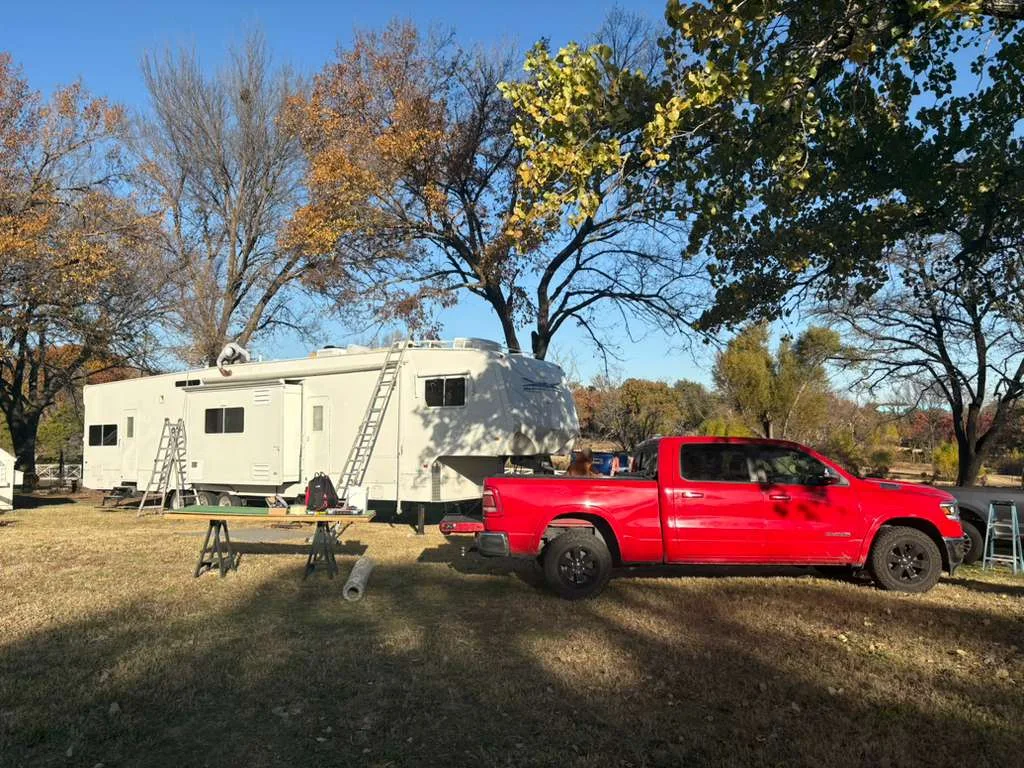
Our team drives directly to your location across Hobe Sound and all of Martin County, so you don't have to tow a rig with a dead electrical system. Danny Vasquez built this mobile-first model specifically for Treasure Coast RV owners who can't always get to a shop. We carry diagnostic equipment and common replacement parts on every truck, which means many emergency repairs get resolved in a single visit.
Pro Tip: Use Your Battery Monitor Before You Lose Power Completely
If your RV has a battery monitor (sometimes called a battery state-of-charge meter), check it immediately when you notice solar output dropping. If your lithium battery bank reads below 20% charge and your solar panels aren't producing, you have roughly two to four hours before you hit a damaging low-voltage cutoff. That's your window to get shade on the panels, reduce loads, and call a technician. Don't wait until the lights go out.
Florida-Specific Urgency: Why Hobe Sound's Climate Makes Solar Failures Worse
Hobe Sound sits in one of the most demanding environments for RV electrical systems in the country. The combination of intense UV exposure, salt air drifting in from the Atlantic, and humidity that rarely drops below 60 percent creates a perfect storm for solar component failure. We regularly find charge controllers that have corroded internally, panel junction boxes that have let moisture in, and battery terminals that look like they've been underwater.
Heat is the other factor most people underestimate. Lithium batteries lose efficiency and lifespan when they charge in ambient temperatures above 95 degrees Fahrenheit, which is a regular afternoon in Martin County from April through October. If your battery management system (BMS) shuts down charging due to high temperature, your solar system will appear completely dead even though nothing is actually broken. This is a common emergency call we get from campers near Hobe Sound during summer months.
UV degradation is also faster here than the national average. Panel output can drop 15 to 25 percent after five years of Florida sun exposure without any visible damage to the glass. If your system is older than five years and suddenly underperforming, UV-related degradation combined with salt air micro-corrosion on the electrical contacts is likely to blame.
| Emergency Solar Repair Service | Estimated Cost |
|---|---|
| Charge controller replacement (PWM or MPPT) | $200 - $550 |
| Solar panel replacement (single panel) | $300 - $700 |
| Lithium battery replacement (single 100Ah) | $400 - $900 |
| Inverter replacement (1000W-3000W) | $450 - $1,200 |
| Full wiring inspection and repair | $250 - $600 |
| Complete off-grid system overhaul | $1,800 - $4,500 |
| Energy audit and battery monitor install | $200 - $450 |
Pricing Disclaimer
All prices shown are estimates based on national averages and our service history. Actual costs may vary depending on current market conditions, parts availability, your specific RV model, and the scope of work required. The only way to determine your final cost is through an on-site diagnosis by our certified technician. Call (772) 677-1583 for a free estimate.
Temporary Fixes That Can Buy You Time Until a Pro Arrives
There are a few safe temporary measures you can take while you wait for a technician. If your charge controller has blown a fuse, check the manufacturer's spec sheet for the correct amperage and replace it only with an identical fuse. Never upsize a fuse to get the system running again. That fuse blew because something downstream drew too much current, and upsizing it means the next thing that melts will be wire insulation, not a replaceable fuse.
If you have a generator, plug into shore power through your converter to keep the battery bank from dropping further. This doesn't fix the solar system, but it protects your batteries, which are often the most expensive component to replace. A single lithium battery replacement can run $400 to $900, so protecting what you have while waiting for diagnosis is smart money.
Covering your solar panels with a tarp or moving the rig into shade will also stop any potential overcharge situation if the charge controller is behaving erratically. This is especially relevant if you're seeing unusual readings on your battery monitor. It's a simple step that takes five minutes and can prevent a lot of expensive damage. For more context on what these systems cost and why they're worth protecting, check out our guide on whether RV solar is worth it in Florida.
When a Certified Tech Makes All the Difference
Danny Vasquez and our RVIA certified team have completed over 4,100 repairs since 2013, and solar electrical failures are among the most misdiagnosed problems we see from DIY attempts. What looks like a dead panel is often a failed bypass diode inside the junction box, and what looks like a dead battery is often a tripped BMS that resets with the right tool. Getting the diagnosis right the first time saves you from buying parts you don't need.
When to Call a Pro Instead of Troubleshooting Yourself
Call a professional immediately if you smell burning plastic or rubber near your battery compartment or inverter. Also call right away if you see swelling on any battery cell, corrosion so heavy it's flaked onto surrounding components, or if your system tripped a breaker more than once after resetting it. These aren't inconveniences. They're signs of an underlying fault that gets worse the longer it runs.
You should also call a pro if your system is under five years old and failing. Early failure almost always points to an installation error rather than normal wear, and catching it early limits the damage. Our team serves Hobe Sound and 15 other cities across St. Lucie, Martin, and Indian River counties, so we can usually get to you the same day you call.
For a bigger picture on what Treasure Coast RV repairs typically cost, our RV repair cost guide breaks down pricing across all service categories. And if the heat has knocked out more than just your solar system, our Treasure Coast RV AC survival guide covers what to do when your cooling system goes down at the same time. Reach out to our solar repair team at (772) 677-1583 anytime you're not sure what you're looking at.
Questions about rv solar power on the Treasure Coast? Call (772) 677-1583 and ask for Danny. Free estimates, same-day service available.