TL;DR
- Yes, you can DIY minor RV water damage repairs like resealing seams and replacing small interior panels, but structural, mold, and electrical work needs a certified technician.
- Basic water damage assessment and resealing runs $200-$400 if you DIY it correctly; professional restoration ranges from $200 to $5,000 depending on the damage.
- Doing the wrong repairs yourself can void your RV warranty and hide damage that gets far worse in Vero Beach's humid, salt-air climate.
- RVIA guidelines and most manufacturer specs require certified techs for subfloor replacement, delamination repair, and anything touching structural framing.
- Treasure Coast RV Repair has completed 4,100+ repairs across Indian River County and beyond. Call (772) 677-1583 for a free on-site assessment.
Yes, you can handle some RV water damage repairs yourself. Resealing a roof seam, swapping out a soft interior trim panel, or drying out a small wet cabinet are all reasonable DIY projects if you catch the problem early. But here in Vero Beach, where summer humidity regularly pushes past 80% and salt air accelerates every type of material breakdown, what looks like a minor drip on a Monday can become a rotted subfloor and active mold colony by the following weekend.
At Treasure Coast RV Repair, Danny Vasquez and our team have been sorting out exactly these situations since 2013. We've completed over 4,100 repairs across Indian River County and the wider Treasure Coast, and we see the same pattern constantly: an RV owner does a surface fix, the underlying moisture keeps spreading, and the repair bill triples. This guide walks you through what's genuinely safe to DIY, what absolutely requires a certified technician, and how to protect your wallet and your warranty. You can also read more on our RV water damage restoration service page for a full breakdown of what we cover.
Can I Do RV Water Damage Restoration Myself? Here's the Honest Answer
The short answer is: it depends entirely on how deep the damage goes. Surface-level issues like cracked caulk around a window frame, a loose roof vent seal, or a damp carpet patch near a door threshold are fair game for a confident DIYer with the right materials. These repairs cost $50-$200 in supplies and can prevent damage from escalating.
The moment water has soaked into your subfloor, traveled behind wall panels, or touched any part of your electrical system, you're in professional territory. Subfloor replacement (a term referring to the structural base layer beneath your RV's interior flooring) can run $800-$2,500 depending on how much material is affected, and doing it wrong means trapped moisture continues rotting the frame underneath. RVIA guidelines require certified technicians for any structural repair on a coach, and most manufacturer warranties echo that requirement.
Down near the Indian River Lagoon, RVs parked at spots like Sebastian Inlet State Park take on salt air from both directions. That salt speeds up metal corrosion inside wall cavities, so what starts as a slow roof leak becomes a frame repair problem faster than it would inland. Don't let a $200 fix turn into a $3,000 job by waiting or guessing.
What RV Water Damage Repairs Are Safe to DIY in Vero Beach
There's a real list of repairs that fall into safe DIY territory, and knowing it can save you a few hundred dollars. Resealing roof seams with a self-leveling lap sealant, replacing a damaged vent cap, recaulking around slide-out seals, and drying out a small wet storage bay with a dehumidifier are all tasks a handy RV owner can tackle on a weekend. You'll need a lap sealant rated for RV roofing (Dicor is a common brand), a utility knife, isopropyl alcohol for cleaning, and a moisture meter to confirm you've actually dried things out.
A moisture meter is the single most important tool in this process. It's a handheld device that reads the water content inside walls and floors without tearing them open. You can pick one up for $30-$80 at any hardware store. If your readings are above 19% in wood materials, drying alone won't be enough and you'll need to open up the panel to let it breathe properly. For more context on how Florida's climate accelerates hidden water damage, check out our related post RV Water Damage in Florida: The Silent Destroyer.
Replace interior trim panels only if they're purely cosmetic and you can confirm there's no moisture behind them. Use a moisture meter before you nail anything back in place.
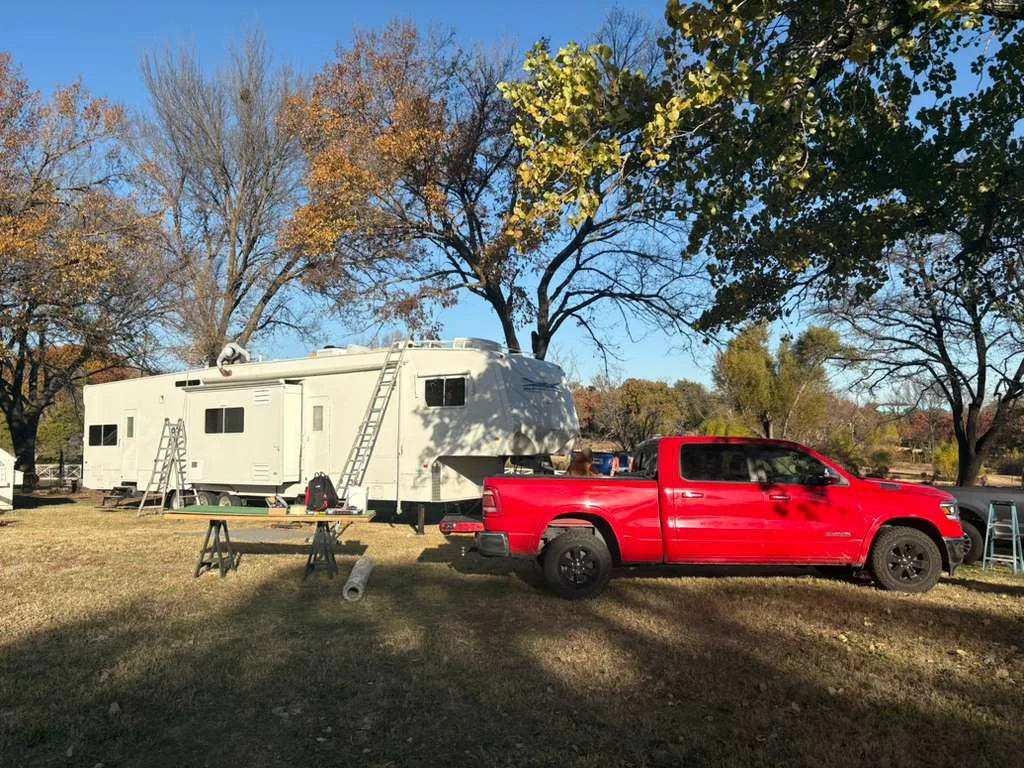
Tools You'll Need for DIY RV Water Damage Work
A basic DIY water damage kit includes a moisture meter, lap sealant, a heat gun or fans for drying, painter's tape, isopropyl alcohol, and a putty knife. For anything beyond surface sealing, you'll also want a pry bar, a circular saw with a fine-tooth blade, and replacement luan or plywood cut to match your floor spec. These tools together run $150-$300 if you don't already own them, which factors into whether DIY actually saves you money on a small job.
Pro Tip: Always Test Before You Seal
Before applying any new caulk or lap sealant, use your moisture meter on the surrounding area. Sealing over damp material traps moisture inside and speeds up rot and mold growth. In Vero Beach's humid climate, a sealed-in moisture pocket can cause more damage in 90 days than the original leak did in a year. Dry first, confirm with a meter reading below 15%, then seal.
What RV Water Damage Work Requires a Certified Technician
Some repairs aren't just difficult, they're specifically governed by RVIA guidelines, NFPA 1192 (the Standard on Recreational Vehicles), and manufacturer warranty terms that require a licensed, certified technician. Delamination repair (the separation of an RV's outer fiberglass skin from its inner wall substrate due to moisture intrusion) is one of the most common examples. Reattaching delaminated sidewalls requires industrial adhesives, clamping equipment, and knowledge of the original lamination process. A bad repair creates air pockets that trap humidity and make the problem worse.
Subfloor replacement, structural aluminum or steel frame repair, mold remediation that covers more than 10 square feet, and any repair that touches your 12V or 120V electrical system all fall into professional-only territory. Under NEC Article 551, RV electrical work must be done to specific standards, and improper repairs create real fire and shock hazards. Our team at Treasure Coast RV Repair is RVIA certified, licensed, bonded, and insured, which matters when your insurance company asks who did the work. You can see the full scope of what we handle on our water damage restoration service page.
| Repair Type | DIY Estimated Cost | Professional Estimated Cost |
|---|---|---|
| Roof seam resealing | $50-$100 | $200-$350 |
| Window or vent recaulking | $30-$60 | $150-$250 |
| Interior trim panel replacement (cosmetic) | $80-$150 | $200-$400 |
| Subfloor replacement (partial) | Not recommended | $800-$2,500 |
| Delamination repair | Not recommended | $1,200-$3,500 |
| Mold remediation | Minor surface only | $500-$2,000 |
| Structural frame repair | Not safe to DIY | $1,500-$5,000 |
| Full water damage restoration | Partial only | $200-$5,000 |
Pricing Disclaimer
All prices shown are estimates based on national averages and our service history. Actual costs may vary depending on current market conditions, parts availability, your specific RV model, and the scope of work required. The only way to determine your final cost is through an on-site diagnosis by our certified technician. Call (772) 677-1583 for a free estimate.
The Real Risk of DIY Mistakes on RV Water Damage
The biggest mistake we see isn't bad technique, it's incomplete diagnosis. An RV owner finds a soft spot in the floor near the bathroom slide, replaces the visible flooring, and considers it done. Three months later, the frame underneath has continued rotting because the moisture source (usually a failed slide seal or a pinhole in the roof membrane) was never addressed. That repair that should have cost $400 professionally now costs $2,500 because the frame needs work too.
Mold is the other serious risk. In Vero Beach's climate, mold colonies can establish in damp wall cavities within 24 to 48 hours of water intrusion. Surface mold on a visible panel looks manageable, but the same moisture that fed that mold has usually already traveled deeper into insulation and framing. Disturbing mold without proper containment and PPE can spread spores through your entire coach. Our team follows established mold remediation protocols and we've handled hundreds of these cases across Indian River County and the Treasure Coast.
There's also the safety angle with electrical systems. Water and 12V or 120V systems don't mix, and an improperly dried or repaired coach can have corroded wiring that creates intermittent shorts. That's a fire risk, not just an inconvenience.
When Our Team Comes to You
We offer mobile RV repair service across 16 cities in St. Lucie, Martin, and Indian River counties, which means Danny Vasquez's team can come directly to your campsite, storage facility, or driveway in Vero Beach for an on-site assessment. Our diagnostic visit includes a full moisture meter survey, visual inspection of all seals and roof membranes, and a written estimate before any work begins. You can book through our Vero Beach service area page or call us directly at (772) 677-1583.
When DIY RV Repairs Void Your Warranty
This is the part most RV owners don't find out until it's too late. Most RV manufacturers, including Forest River, Thor, Winnebago, and Airstream, include language in their limited warranties requiring that structural repairs, roof repairs, and water intrusion repairs be performed by an RVIA-certified facility. If you attempt a subfloor replacement or delamination fix yourself and the repair fails or causes secondary damage, the manufacturer can deny your warranty claim entirely.
Even on older units where the factory warranty has expired, your extended warranty or RV insurance policy likely has the same requirement. Insurers in Florida pay close attention to who performed the work and whether they were licensed and certified. We've seen claims denied because a well-intentioned owner patched a roof with the wrong sealant type, which then caused additional delamination the insurer classified as owner-caused damage.
If your RV is under any kind of coverage, call us before you pick up a caulk gun for anything beyond a true surface touch-up. A quick call to (772) 677-1583 can save you a denied claim. You can also compare typical repair costs for the Treasure Coast area in our RV Repair Cost Guide before deciding how to proceed.
Why Treasure Coast RV Repair Is the Right Call for Vero Beach RV Owners
Danny Vasquez founded Treasure Coast RV Repair in 2013 with a straightforward goal: give RV owners on the Treasure Coast the same quality of repair work you'd expect from a top-tier dealership, but with mobile convenience and honest pricing. With 4,100+ completed repairs, a 4.9-star rating across 267 Google reviews, and RVIA certification, we've earned the trust of RV owners from Vero Beach to Port St. Lucie and everywhere in between.
We know Indian River County's specific conditions. The combination of UV intensity, salt air from the Atlantic, and summer humidity that sits above 80% for months at a time means water damage here moves faster and hits harder than in most parts of the country. Our team accounts for those conditions in every repair, using materials and methods rated for coastal Florida environments. Visit our Vero Beach service area page to learn more about our local coverage, or call (772) 677-1583 to schedule your free on-site estimate today.
Questions about rv water damage restoration on the Treasure Coast? Call (772) 677-1583 and ask for Danny. Free estimates, same-day service available.